Home / Buyer Guides / Leather Motorcycle Jacket Guide
Leather Motorcycle Jacket Manufacturing Guide
What riding brands, dealers and clubs should specify when ordering custom leather motorcycle jackets and pants: hides, thickness, armor, CE levels, construction and branding.
Updated November 2026 · Villgro Wears production team, Sialkot
On this page
Key points
- Cowhide gives the most abrasion protection; goatskin is lighter and more comfortable.
- For road jackets, 1.1–1.4 mm full-grain or top-grain leather is a common range.
- Impact protection comes from armor: specify CE Level 1 or Level 2 and the pocket positions.
- In Europe, motorcycle garments sold as protective equipment need CE certification.
Define the rider and the style
A café racer jacket for city riding and a race jacket for track days are built very differently. Start your brief with the rider and the use:
- Style: sport, café racer, cruiser, touring or adventure.
- Riding: daily commuting, long-distance touring or track use.
- Climate: perforated panels for heat, thermal liners and waterproof membranes for cold and rain.
- Market: where you will sell, because Europe has stricter rules for protective clothing than the USA.
We produce leather and textile motorcycle jackets and motorcycle pants for brands, dealers and riding clubs.
Choosing the hide
| Leather | Character | Best for |
|---|---|---|
| Cowhide | Thick, tough, the best abrasion resistance; needs breaking in | Sport, race and touring jackets |
| Goatskin | Lighter, softer, flexible; a little less abrasion resistance | Urban and café racer styles |
| Buffalo | Heavy, rugged grain, very durable | Classic and cruiser styles |
| Sheepskin / lambskin | Very soft and light, low abrasion resistance | Fashion jackets, not protective riding gear |
Full-grain leather keeps the complete outer surface of the hide and is the strongest. Top-grain is lightly corrected for a uniform look and is widely used in riding jackets. Avoid split or bonded leather on protective panels. Finishes such as drum-dyed, waxed, distressed or perforated leather change the look but should not reduce thickness in impact zones.
Leather thickness
Thickness affects protection, weight and comfort. As a general guide, road riding jackets use around 1.1–1.4 mm leather, while race suits typically use the heavier end of that range. Thinner leather may be used on non-impact areas such as stretch panels and inner sleeves to improve movement.
Specify the thickness for each zone in your tech pack: shoulders, elbows, back and hips are the areas most likely to touch the road in a fall. Ask for the leather thickness to be measured on the sample, not only stated on a specification sheet.
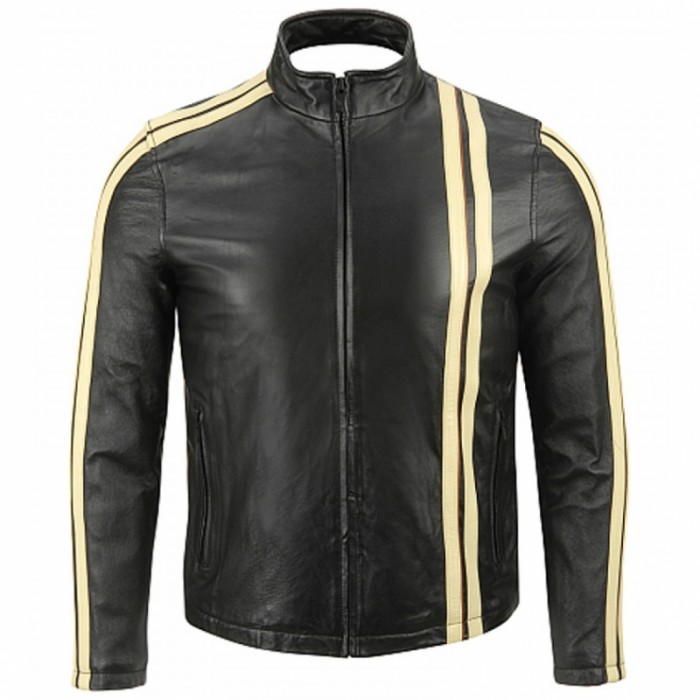
Armor and CE protection levels
Leather protects against abrasion; armor protects against impact. Most jackets have pockets at the shoulders, elbows and back, and pants at the knees and hips.
| Standard | What it tests | Levels |
|---|---|---|
| EN 1621-1 | Shoulder, elbow, hip and knee protectors | Level 1 and Level 2 (Level 2 absorbs more energy) |
| EN 1621-2 | Back protectors | Level 1 and Level 2 |
| EN 1621-3 | Chest protectors | Level 1 and Level 2 |
| EN 17092 | The complete garment: abrasion, seams and fit | Classes AAA, AA, A, B and C |
A jacket can contain CE-approved armor without the jacket itself being certified to EN 17092. In the European Union, motorcycle clothing sold as protective equipment must carry CE certification for the whole garment. In the USA there is no mandatory standard for riding jackets, but many buyers still ask for CE-rated armor. Decide early which you need, because the garment test depends on the final leather, seams and armor.
Construction details that matter
- Seams: double or triple stitching in impact zones, with strong polyester or aramid thread.
- Pre-curved sleeves: keep the arms comfortable in a riding position.
- Stretch panels: accordion or textile panels at the back and elbows for movement.
- Liners: mesh, removable thermal or waterproof membranes.
- Hardware: heavy-duty zips, snaps on collars and cuffs, and a connection zip to attach jacket and pants.
- Visibility: reflective piping or panels for night riding.
Leather or textile?
Textile jackets made from Cordura-type fabrics are lighter, often waterproof and easier to care for, which makes them popular for adventure and touring riders. Leather offers better abrasion resistance and a classic look for sport and cruiser styles. Many brands offer both. We manufacture either, with armor pockets, liners and membranes as required.
Branding and finishing
Common branding options include embossed or debossed leather logos, embroidered patches, printed or reflective logos, metal badges, custom zipper pullers and branded linings. Clubs often add back patches and name tags. Finish with hang tags, garment bags and size labels for retail. See our branding options.
Samples, sizing and quality checks
Fit matters more on motorcycle jackets than on most garments, because armor only works when it stays in place. Approve the sample on a rider in a riding position.
- Check that armor sits over the shoulders and elbows when the arms are forward.
- Measure leather thickness in impact zones.
- Inspect stitching density and seam strength.
- Test zips, snaps and the jacket-to-pants connection.
- Confirm logo positions, liners and labels.
Our MOQ is 50 pieces per style and color, with samples in 7–10 days. Read our gloves guide if you also plan matching riding gloves.
Questions about motorcycle jackets
What is the best leather for a motorcycle jacket?
Cowhide is the most common choice because it offers strong abrasion resistance at a reasonable price. Goatskin is lighter and more comfortable for urban riding.
How thick should motorcycle jacket leather be?
Road riding jackets commonly use around 1.1–1.4 mm leather in the main panels. Thinner leather can be used in non-impact areas for comfort.
What is the difference between CE Level 1 and Level 2 armor?
Both are tested to EN 1621. Level 2 protectors transmit less force in the impact test, so they offer more protection, usually with slightly thicker padding.
Do motorcycle jackets need CE certification?
In the European Union, motorcycle garments sold as protective equipment need CE certification. In the USA there is no mandatory standard, although CE-rated armor is widely requested.
Can you make matching motorcycle pants?
Yes. We produce leather and textile riding pants with knee and hip armor pockets and connection zips to match your jackets.
Develop your riding collection
Send your style, hide preference, armor requirements and quantities. We will propose materials and send a quotation with sample timing.